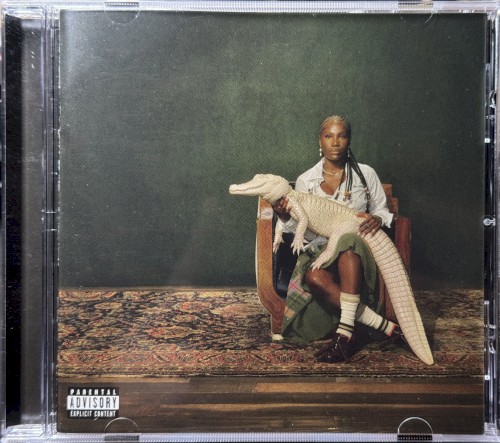

Ctrl is the sound of someone thinking out loud, and all the contradictions that entails. SZA's debut album is a stream-of-consciousness exploration of desire, jealousy, self-doubt, and the gap between the person you want to be and the person you actually are. It is not always pretty, and it is not always coherent, and that is precisely what makes it so compelling.
The production, assembled by a team that includes Carter Lang, ThankGod4Cody, and Frank Dukes, is immaculate. The beats are warm and spacious, built on pillowy synthesizer pads, crisp drum programming, and bass tones that sit just below the threshold of consciousness. "Love Galore" - featuring a perfectly placed Travis Scott hook - rides a woozy, pitched-down sample over a trap-influenced drum pattern that gives the track a contemporary edge without sacrificing the organic warmth that characterises the album's overall sound. "The Weekend" strips things back to a minimal, almost ambient groove that allows SZA's vocal to carry the full emotional weight.
SZA's voice is her most powerful instrument, and she uses it with remarkable range and intelligence. On "Supermodel," she delivers rapid-fire verses with a conversational ease that dissolves the boundary between singing and speaking. On "Normal Girl," her vocal stacks create a choir-of-self effect that mirrors the song's exploration of fractured identity. Her falsetto on "Pretty Little Birds" is delicate and affecting, and the subtle use of vocal processing throughout adds textural variety without ever obscuring the human quality of her delivery.
The lyrical content is startlingly honest. SZA does not present a curated version of herself - she presents the whole thing, insecurities and all. "Drew Barrymore" unpacks the specific anxiety of feeling less attractive than your partner's ex with a precision that is both uncomfortably relatable and blackly funny. "20 Something" closes the album with a meditation on the terror of adulthood that captures a generational mood with remarkable accuracy.
Ctrl does not reinvent R&B. What it does, perhaps more valuably, is demonstrate that vulnerability and honesty are the most powerful tools an artist possesses. In a genre that often prizes polish above all else, SZA proved that imperfection can be its own kind of perfection.