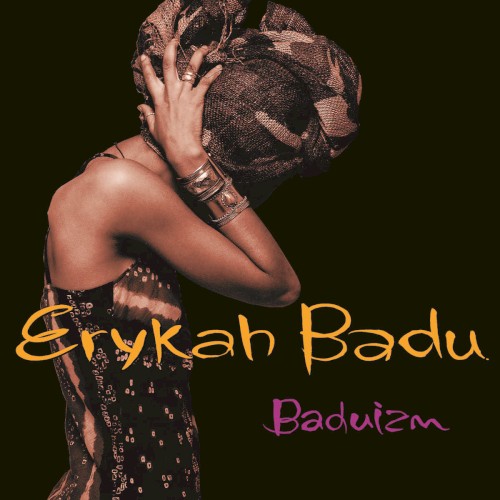

Baduizm arrived in 1997 like a corrective to everything happening in mainstream R&B. While the charts were dominated by glossy, digitally produced confections, Erykah Badu released an album that sounded like it had been recorded in a smoky jazz club in 1972, its production warm, organic, and deliberately analogue. The result was a debut that launched a movement - neo-soul did not begin with Baduizm, but it was the album that gave the genre its commercial viability and its cultural cachet.
The production, primarily by the Roots' Questlove and J Dilla collaborator Madukwu Chinwah, is a masterclass in restraint. The beats are live - real drums, real bass, real keyboards - recorded with a warmth and fidelity that lets you hear the room around the musicians. The electric piano on "On & On" has a Rhodes-like shimmer that creates a bed of harmonic warmth beneath Badu's vocal. The bass on "Appletree" is deep and melodic, its tone so rich you can almost feel the vibration of the strings.
Badu's voice is the album's centrepiece, and what a voice it is. Her instrument is extraordinarily versatile - she can move from a breathy whisper to a full-throated soul shout within a single phrase, and every gradation between those extremes carries emotional weight. On "Certainly," she opens with a spoken-word passage that evolves seamlessly into melody, blurring the line between speech and song in a way that is both technically impressive and emotionally engaging. "Next Lifetime" showcases her ability to convey complex emotion through subtle inflection - the resignation in her voice as she sings about delayed desire is heartbreaking.
The song structures are unconventional for R&B. Many tracks extend beyond the five-minute mark, allowing grooves to develop and variations to accumulate in a way that owes more to jazz than to pop. "Rim Shot" builds over seven minutes, its groove deepening and intensifying as layers of percussion and keyboard are added, creating a cumulative effect that rewards patient listening.
Baduizm proved that Black music did not have to choose between commercial appeal and artistic integrity. Badu created something that was simultaneously accessible and uncompromising, and in doing so she opened a door that D'Angelo, Lauryn Hill, and a generation of artists walked through.