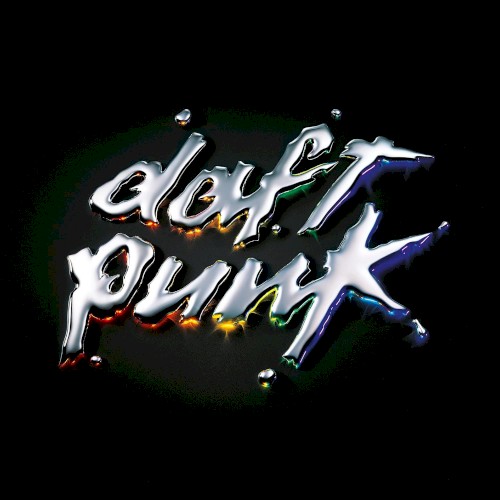

Discovery is the album that should have been impossible. After the raw, aggressive acid house of Homework, Thomas Bangalter and Guy-Manuel de Homem-Christo pivoted completely - toward soft rock samples, vocoder-processed vocals, disco grooves, and a production aesthetic that was warmer, more melodic, and more emotionally accessible than anything in their catalogue. The result is one of the most joyful and influential electronic albums ever made.
The sample work is extraordinary. "One More Time" builds its euphoric chorus around a pitched-up vocal sample from Eddie Johns' "More Spell on You," but what Daft Punk do with that sample - compressing it, layering it, wrapping it in shimmering synthesizer pads and a four-on-the-floor kick drum that could power a small city - transforms it into something entirely new. "Digital Love" flips a George Duke guitar riff into a sun-drenched pop song that is simultaneously a love letter to 1980s soft rock and a demonstration of how sampling can be a creative act as profound as original composition.
The vocoder is the album's signature instrument. Bangalter and de Homem-Christo route their voices through layers of processing that render them simultaneously robotic and deeply human. On "Something About Us," the vocoder vocals convey a tenderness and vulnerability that no unprocessed voice could achieve - there is something about the mechanical quality that strips away pretense and leaves only the raw emotion beneath.
The production throughout is meticulous. Every frequency has been considered, every transition engineered for maximum impact. The way "Crescendolls" erupts from a filtered loop into a full-spectrum dance-floor filler is a masterclass in build-and-release dynamics. "Veridis Quo" slows the tempo to a glacial crawl, its synthesizer pads floating through space like debris from a gentle explosion, before "Short Circuit" crashes in with a distorted, aggressive energy that reminds you these are the same producers who made "Da Funk."
Discovery proved that electronic music could carry the same emotional weight as any guitar-driven rock record. Its influence is everywhere - in the pop-house of the 2010s, in the synth-wave revival, in every producer who has ever tried to make a dance track that could also make you cry.