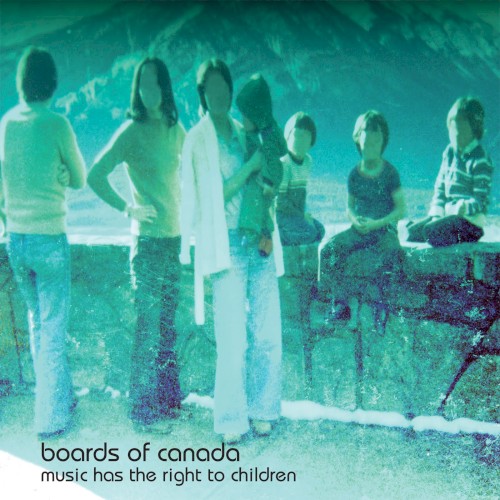

Music Has the Right to Children is an album haunted by nostalgia for something that may never have existed. Michael Sandison and Marcus Eoin construct their tracks from decayed samples, detuned synthesizers, and hip-hop-influenced beats that have been processed until they sound like they are being played back on a tape deck slowly eating itself. The result is music that evokes the experience of remembering - not the memories themselves, but the act of reaching for something that is already fading.
The production techniques are remarkable. Boards of Canada famously run their sounds through old tape machines and analogue filters, degrading the signal until it acquires a warm, fuzzy quality that is instantly recognizable. The synth melodies on "Roygbiv" - one of the most beautiful pieces of electronic music ever composed - sound like they are being transmitted from a great distance, their edges softened by the journey. "Aquarius" pairs a crisp breakbeat with synth pads so heavily processed that they blur into pure texture, creating a tension between rhythmic clarity and harmonic ambiguity.
The hip-hop influence is often overlooked. Many of these tracks are built on sampled breakbeats that have been slowed, pitched down, and treated with effects until they barely resemble their sources, but the rhythmic sophistication remains. "Telephasic Workshop" uses a beat that swings with a looseness that owes everything to golden-age hip-hop production, while "Pete Standing Alone" layers multiple rhythm tracks in a way that creates a complex, shifting groove beneath its melancholic synth line.
The use of found sounds and vocal samples adds a documentary quality that deepens the album's emotional impact. Children's voices, educational film narration, and fragments of speech drift through the mix like half-remembered conversations, creating a sense of lost innocence that is both specific and universal.
Music Has the Right to Children does not demand attention in the way that more aggressive electronic music does. It rewards patience, immersion, and repeated listening. Each return reveals new details - a hidden melody, a subtle rhythmic variation, a sample you never noticed - and the cumulative effect is an album that feels less like a collection of tracks and more like a place you can visit whenever you need to feel something you cannot quite name.