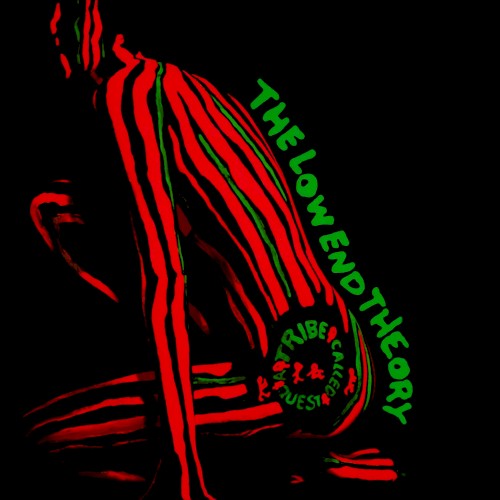

The Low End Theory is the album that fused jazz and hip-hop so seamlessly that every subsequent attempt to combine the two genres has been measured against it. Q-Tip's production is startlingly minimal - most tracks are built on little more than a bass line, a drum break, and a carefully chosen jazz sample - and this economy is precisely what makes the album so powerful. There is nowhere to hide in these mixes. Every element is exposed, and every element is perfect.
The bass is the album's defining characteristic. Ron Carter - the legendary jazz upright bassist who played with Miles Davis - contributes to "Verses from the Abstract," and his deep, woody tone sets the standard for the low-end sound that runs through the entire record. But even on tracks where the bass is sampled rather than played live, Q-Tip achieves a warmth and depth that was revolutionary for hip-hop production. The bass line on "Excursions" - a looped sample that sits low in the mix, providing a rumbling foundation for Q-Tip's reflective verses - changed the way producers thought about frequency balance.
Q-Tip and Phife Dawg's interplay is at its peak here. Q-Tip's flow is smooth and jazzy, his delivery relaxed but rhythmically precise, his words landing on the beat with the casual authority of a musician who has internalised the groove so completely that he no longer has to think about it. Phife provides the contrast - more aggressive, more verbally dexterous, with a conversational delivery that makes his most complex rhyme schemes sound like everyday speech.
The sample selection is impeccable. Q-Tip draws from jazz, soul, and R&B with a curator's ear, selecting fragments that retain their emotional resonance even when isolated from their original context. "Check the Rhime" uses a simple keyboard loop as its foundation, but the way Q-Tip layers additional samples and textures around it creates a richness that belies the track's apparent simplicity.
The Low End Theory proved that hip-hop production did not need to be loud or complex to be powerful. Sometimes all you need is the right bass note, the right break, and two MCs who understand that the space between the notes matters as much as the notes themselves.