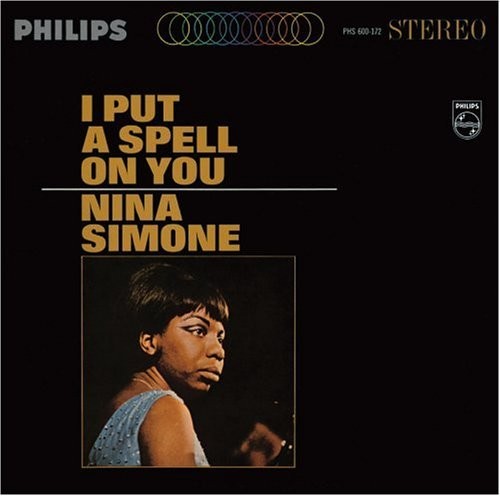

I Put a Spell on You captures Nina Simone at a pivotal moment - the classically trained pianist who wanted to be the first Black woman to play Carnegie Hall as a concert pianist had fully embraced her identity as a protest singer, a jazz musician, and an uncompromising artist. The album's twelve tracks range across jazz, soul, blues, Broadway, and folk with a fearlessness that reflects Simone's absolute refusal to be categorised.
Her piano playing is the album's most underappreciated element. Trained at Juilliard, Simone brings a classical musician's technique and harmonic vocabulary to popular music forms, and the results are startling. The introduction to "Feeling Good" - those famous descending chords - combines jazz voicings with a dramatic sensibility that owes more to Rachmaninoff than to Thelonious Monk. Her accompaniment on "Ne Me Quitte Pas" is sparse and devastatingly effective, each chord placed with the precision of a concert pianist and the emotional intuition of a great blues musician.
Simone's voice defies description. It is deep, rich, and capable of expressing the full range of human emotion within a single phrase. On the title track, she transforms Screamin' Jay Hawkins's novelty song into a genuine incantation - her delivery is so commanding, so saturated with authority, that the song's supernatural conceit becomes entirely believable. "Feeling Good" builds from a whispered opening to a full-throated declaration of liberation, each verse adding intensity until the final chorus arrives with the force of revelation.
The orchestral arrangements by Hal Mooney provide a lush backdrop without ever overwhelming Simone's presence. The strings on "Tomorrow Is My Turn" swell behind her vocal with a cinematic grandeur that elevates the song from a simple chanson into something epic. The brass punctuations on "Take Care of Business" add a rhythmic punch that drives the song's groove forward while Simone's piano and vocal work in tandem.
Simone's interpretation of Jacques Brel's "Ne Me Quitte Pas" is one of the album's defining moments. Singing in French with impeccable pronunciation and deep emotional engagement, she transforms a Belgian chanson into a universal statement about loss and desperate love. It is a performance that reminds us that great art transcends language, culture, and genre - it speaks directly to the human condition, and Nina Simone spoke more directly than almost anyone.