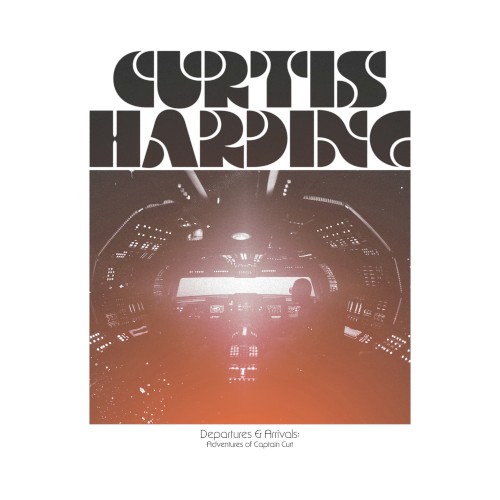

The conceit is magnificent and slightly absurd: Captain Curt, a pilot lost somewhere in the vast emptiness of space, sending transmissions back to Earth in the form of eleven soul songs. In lesser hands this would be a gimmick - a concept album where the concept overwhelms the music, where narrative obligations strangle the songs. Curtis Harding is not lesser hands. Departures & Arrivals transforms its science-fiction framework into something genuinely moving, a meditation on distance, loneliness, and the human need to connect that happens to be set among the stars.
The soul credentials are impeccable. Harding grew up singing gospel in Atlanta, and that training is audible in every note he sings. His voice has a warmth and grain that recalls the great soul vocalists of the late sixties and early seventies - Marvin Gaye's tenderness, Curtis Mayfield's falsetto reach, Bobby Womack's grit. "There She Goes" opens the album with a vocal performance so rich and unadorned that the space-opera concept momentarily disappears. You are not listening to a character. You are listening to a man who can sing, delivering a melody with the conviction that only comes from genuine emotional investment.
The production bridges eras with remarkable sophistication. The arrangements draw on classic soul instrumentation - horns, strings, Fender Rhodes, bass guitar played with the melodic sensibility of James Jamerson - but the mixing and sonic textures are unmistakably contemporary. "Hard As Stone" layers a vintage bassline beneath synthesisers that shimmer with a cold, digital precision, the contrast between organic warmth and electronic distance mirroring the album's thematic concern with connection across impossible expanses. The gospel-toned backing vocals that swell on the chorus could have been recorded at Muscle Shoals in 1972, but the production places them in a sonic environment that feels both timeless and futuristic.
"The Power" is the album's emotional apex - a slow-burning ballad where Captain Curt confronts the possibility that he may never return home. Harding sings with a restraint that makes the moments when he opens up feel devastating. The arrangement builds from a single electric piano to a full orchestral crescendo, but the dynamics serve the emotion rather than displaying it. When the strings arrive, they do not announce themselves. They accumulate, like grief.
"Running Outta Space" is the album's cleverest moment - a title that works as both literal description and emotional metaphor. The production is the most overtly funky on the record, a propulsive rhythm section driving a track that is simultaneously about the physical reality of being lost in the cosmos and the figurative experience of running out of room in a relationship. Harding navigates the double meaning with a lightness of touch that allows both readings to coexist without either undermining the other.
What elevates Departures & Arrivals beyond its concept is the emotional authenticity that Harding brings to every performance. Captain Curt may be a fictional character, but the longing in these songs is real. The desire to reach across distance, to be heard, to find a way home - these are not science-fiction themes. They are the most fundamental human experiences, dressed in a spacesuit and sent into orbit. Harding has made an album that proves soul music can go anywhere - even to the stars - without losing the thing that makes it soul.