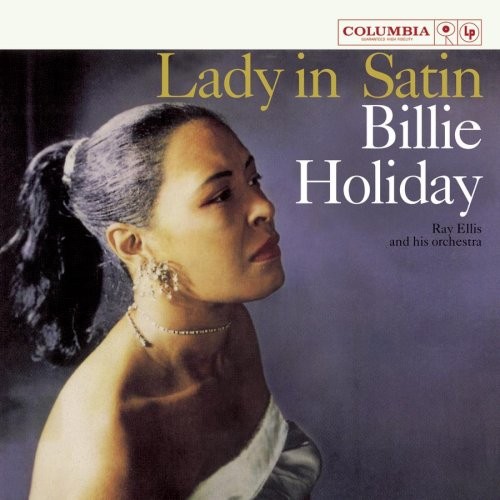

Lady in Satin is an album that should not be beautiful. By 1958, years of addiction and hard living had stripped Billie Holiday's voice of the supple, girlish tone that had made her famous in the 1930s and 1940s. What remained was rough, limited in range, and occasionally uncertain in pitch. And yet Lady in Satin, recorded with Ray Ellis's lush orchestral arrangements, is not merely beautiful - it is one of the most emotionally devastating vocal recordings in the history of music. Holiday's technical decline had, paradoxically, deepened her art immeasurably.
The voice on this album is a lived-in instrument. Every crack, every rasp, every moment where the breath catches and the note wavers carries the weight of experience - of joy and suffering, of love found and love destroyed. On "I'm a Fool to Want You," Holiday delivers the lyric with a directness that obliterates the boundary between singer and song. You do not hear a jazz vocalist interpreting a standard; you hear a woman in the grip of an emotion so powerful that it can barely be contained within the framework of music.
Ellis's string arrangements provide a gorgeous, sometimes overwhelming backdrop. The lush orchestral writing - sweeping violins, French horns, harp glissandos - creates a cinematic grandeur that contrasts sharply with the vulnerability of Holiday's vocal. This contrast is the album's defining tension and its greatest strength. On "You Don't Know What Love Is," the strings swell with a romantic fullness that Holiday's cracked, weary voice simultaneously inhabits and undermines, creating an emotional complexity that no amount of technical perfection could achieve.
Holiday reportedly wept when she heard the playbacks. She called the album her favourite recording, and it is easy to understand why. For the first time, the music matched the depth of feeling she had always brought to her performances. The imperfections of her voice - the very qualities that some critics at the time considered deficiencies - gave her interpretations a truth and a gravity that transcended conventional standards of vocal beauty.
Lady in Satin was released less than a year before Holiday's death at forty-four. It is her final testament, and it teaches us something profound about art: that beauty is not the same as perfection, that the deepest expression often comes through broken vessels, and that a voice at the end of its technical capacity can speak more truthfully than one at its peak.