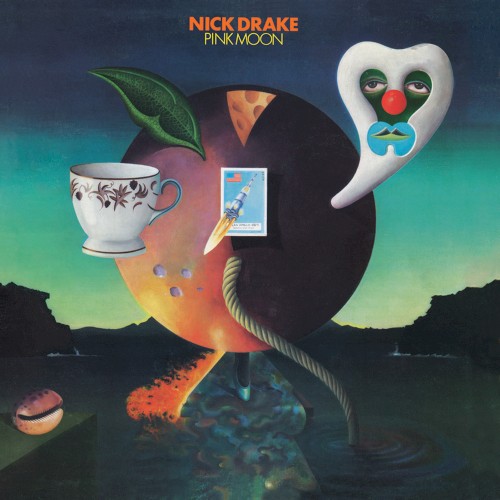

Pink Moon is the sound of everything being stripped away. After the lush orchestral arrangements of Bryter Layter and Five Leaves Left, Nick Drake arrived at Sound Techniques studio in October 1971 with nothing but his guitar and his voice. He recorded the album's eleven songs in two late-night sessions, reportedly without informing the studio staff he was coming. John Wood, the engineer, has said that Drake simply appeared, recorded, and left. The entire album was completed in less than four hours.
The result is one of the most intimate recordings in the history of popular music. Drake's guitar playing - always his most remarkable gift - is captured with a clarity and presence that places the listener inches from the strings. His open tunings create harmonic resonances that seem to sustain indefinitely, each chord ringing with overtones that fill the silence between notes. On "Place to Be," his fingerpicking is so precise and so delicate that each note seems to exist independently, suspended in space like drops of water.
Drake's voice on Pink Moon is barely there. He sings with a whispered intimacy that makes even the album's most direct statements feel like secrets shared in confidence. On "Things Behind the Sun," his vocal delivery strips the words of their rhythmic stress, allowing them to float above the guitar pattern with a freedom that dissolves the boundary between speech and melody. The brief moment of overdubbed piano on the title track - the album's only additional instrumentation - arrives like a shaft of light in a darkened room.
The lyrics, though often opaque, convey a profound sense of resignation and farewell. "From the Morning" closes the album with what sounds like a benediction - "a day once dawned, and it was beautiful" - delivered with a serenity that is either deeply peaceful or deeply troubling, depending on what you bring to the listening.
Pink Moon sold fewer than three thousand copies on its initial release. Drake died two years later at the age of twenty-six. In the decades since, the album has been recognized for what it always was - a work of art so pure and so unmediated that it seems to bypass the intellect entirely and speak directly to the soul. There is nothing else like it.