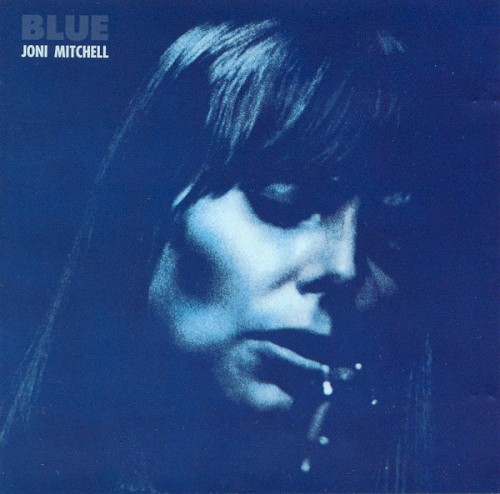

Blue is an album of terrifying honesty. Joni Mitchell has said that at the time of its recording she felt like a cellophane wrapper on a cigarette pack - transparent, fragile, offering no protection from the world outside. That vulnerability saturates every second of the album's thirty-six minutes, creating a listening experience that is as close to direct emotional transmission as music has ever achieved.
The arrangements are deliberately bare. Mitchell accompanies herself on piano, guitar, and Appalachian dulcimer, with occasional contributions from James Taylor and Stephen Stills so restrained they barely register. This spareness places her voice at the absolute centre of the music, with nowhere to hide. On "A Case of You," her vocal - clear, precise, and aching with restrained emotion - carries the song's progression from tenderness to devastation with only a dulcimer for accompaniment. It is one of the most exposed vocal performances in recorded music.
Mitchell's guitar tunings are a world unto themselves. She uses over fifty alternate tunings across her catalogue, and the voicings she creates on Blue - rich, resonant chords that combine open strings with fretted notes in unusual intervals - give the guitar an almost orchestral fullness. The introduction to "California" creates a rhythmic momentum that recalls the strumming patterns of flamenco, while "River" borrows the opening phrase of "Jingle Bells" and transforms it into a piano figure of extraordinary melancholy.
The songwriting is peerless. "All I Want" opens the album with a rush of desire and restlessness that sets the emotional trajectory for everything that follows. "Little Green" addresses the daughter Mitchell gave up for adoption with a tenderness that was all the more remarkable for being publicly incomprehensible at the time - the song's meaning was not revealed until decades later. "The Last Time I Saw Richard" closes the album with a portrait of disillusionment that is both specific and universal, Mitchell's clear-eyed observation of a friend's surrender to convention carrying the weight of an entire generation's lost idealism.
Blue established the confessional singer-songwriter tradition and remains its unsurpassed pinnacle. Every artist who has ever used music as a vehicle for personal revelation is working in Mitchell's shadow, and none of them have stepped out of it.