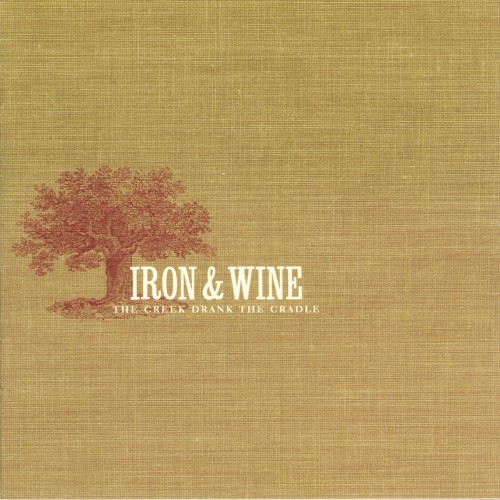

The Creek Drank the Cradle sounds like it was recorded beneath a quilt. Sam Beam's debut as Iron & Wine was made entirely in his home, using basic equipment that captures his whispered vocals and fingerpicked guitar with a lo-fi warmth that is inseparable from the music's emotional character. The tape hiss, the room tone, the occasional background noise - these are not imperfections to be corrected but essential elements of an album that communicates intimacy above all else.
Beam's voice is an extraordinary instrument of quietude. He sings at the very threshold of audibility, his words emerging from the background noise like shapes forming in mist. On "Bird Stealing Bread," his vocal is so close to the microphone that you can hear the moisture on his lips, the subtle breath between phrases. This extreme proximity creates a paradoxical effect - by eliminating the physical distance between singer and listener, Beam creates an emotional closeness that more produced recordings cannot achieve.
The guitar work is understated but technically refined. Beam uses fingerpicking patterns derived from traditional Appalachian and folk music, but his approach is more rhythmically complex than the raw simplicity of his sound might suggest. "Upward Over the Mountain" builds its accompaniment on a pattern that subtly shifts emphasis across its repetitions, creating a gentle propulsive momentum that carries the song forward without disrupting its contemplative mood.
The lyrics traffic in Southern Gothic imagery - rusted gates, creek beds, birds, prairies, the interplay of natural and domestic worlds - and Beam deploys these images with a poet's precision. "The Rooster Moans" is a miniature narrative that unfolds in a series of vivid, disconnected images, each one contributing to an emotional picture that is more felt than understood. This approach to lyric-writing - evocative rather than explicit, atmospheric rather than narrative - gives the songs a dreamlike quality that suits the production perfectly.
The album's limitations are real. The consistent tempo and dynamic range can create a uniformity that makes individual songs difficult to distinguish on casual listening, and the lo-fi production occasionally crosses the line from atmospheric to muddy. But these are the necessary costs of an aesthetic commitment that, at its best, produces music of genuine and fragile beauty.