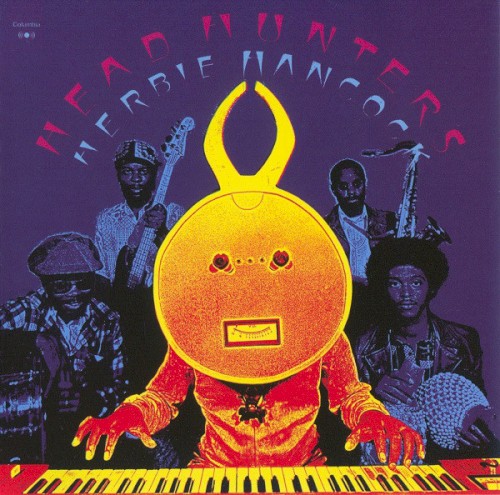

Head Hunters is the album that broke jazz out of the concert hall and put it on the dance floor. Herbie Hancock, who had spent the previous decade as one of the most respected pianists in post-bop jazz - a sideman for Miles Davis, a leader of sophisticated acoustic sessions - plugged in a Fender Rhodes, a Hohner Clavinet, and an ARP Odyssey synthesizer and created music so funky, so groove-driven, and so physically irresistible that it became the first jazz album to be certified platinum.
The opening track, "Chameleon," is fifteen minutes of pure rhythmic joy. The clavinet riff that opens the piece - a syncopated, slippery pattern that anticipates the funk bass lines of the 1980s - establishes a groove so deep that the solos become almost secondary. Hancock layers synthesizer lines over the top with a sense of textural adventure that recalls his work on Miles Davis's Bitches Brew sessions, but the rhythmic foundation here is more accessible, more body-centred, more rooted in the Black American tradition of music that makes you move.
Harvey Mason's drumming is a revelation. His pattern on "Chameleon" is a model of economy - kick, snare, and hi-hat locked into a groove so tight it feels mechanical, but with subtle dynamic variations that betray its human origin. When he opens up during the solo sections, his fills are explosive but never gratuitous, always serving the groove rather than disrupting it.
Bennie Maupin's contributions on soprano saxophone and bass clarinet add a jazz legitimacy that prevents the album from becoming mere funk. His solo on "Watermelon Man" - a reimagined version of Hancock's own 1962 composition - is muscular and searching, its modal explorations reminding us that this is still jazz, even if the rhythm section is making your head nod.
The album's most radical track is "Sly," a tribute to Sly Stone that deconstructs funk into its constituent elements - isolated rhythm guitar hits, fragmented keyboard phrases, drum patterns that start and stop without warning - before gradually assembling them into a coherent groove. It is the sound of a jazz musician thinking about funk with the analytical rigour of a musicologist and the physical instinct of a dancer.
Head Hunters proved that jazz could evolve without losing its identity. Hancock found a way to be intellectually serious and physically joyful simultaneously, and that synthesis remains one of the most important achievements in American music.