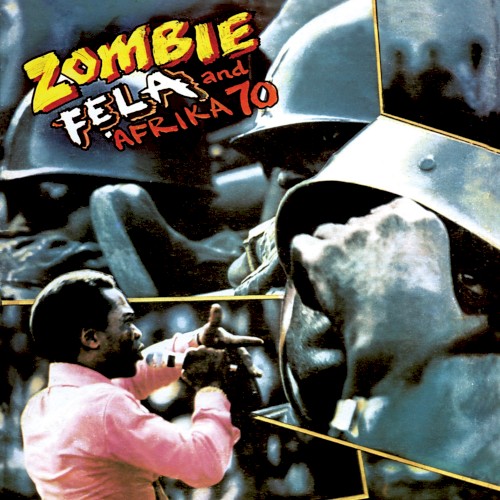

Zombie is protest music at its most consequential. When Fela Kuti released this album in 1977, comparing the Nigerian military to mindless zombies who follow orders without thought, the response was not a bad review or a boycott - it was an actual military assault. A thousand soldiers attacked Fela's Kalakuta Republic commune, beating its residents, throwing his elderly mother from a window (she later died from her injuries), and burning the compound to the ground. That an album could provoke such a response tells you everything about its power.
The title track is a masterpiece of sustained groove. Over twelve minutes, Fela's band Africa 70 locks into a rhythm of almost supernatural tightness - Tony Allen's drumming, widely regarded as the most innovative in African music, provides a polyrhythmic foundation that is simultaneously tight and loose, each limb playing an independent pattern that interlocks with the others in ways that Western drumming rarely attempts. The horn section - alto, tenor, and baritone saxophones over trumpets - plays riffs of such rhythmic precision that they function as additional percussion instruments.
Fela's vocal delivery on "Zombie" is more chant than song. He calls out commands - "quick march, slow march, left turn, right turn" - with a sardonic contempt that makes the satirical intent unmistakable. The call-and-response between Fela and his backing vocalists transforms the track into a communal act of defiance, each repeated phrase gaining power through accumulation.
The bass playing of Franco Abodou anchors everything with a groove so deep and so funky that it connects Afrobeat to the larger diaspora of Black music - you can draw a direct line from this bass tone to Parliament-Funkadelic, to James Brown, to the rhythmic traditions of West Africa that preceded them all.
"Mr. Follow Follow," the album's second track, is equally powerful - a thirteen-minute meditation on conformity and the failure of individual thought that builds from a gentle introduction to a full-band explosion of righteous fury.
Zombie reminds us that music is never just music. It is a social force, a political weapon, and - in the right hands - a tool of liberation so powerful that those in power will stop at nothing to silence it.