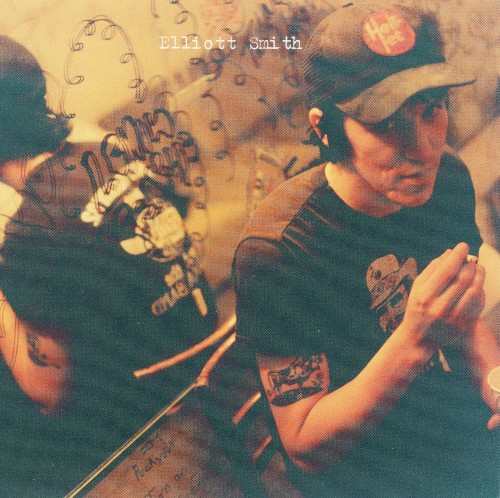

Either/Or is the album where Elliott Smith perfected his art of musical whispering. Named after Kierkegaard's philosophical treatise on the nature of choice, it is an album obsessed with the spaces between decisions - the paralysis of the moment before commitment, the haunted retrospection of the moment after. Smith's voice, barely rising above a murmur throughout, conveys these themes with an intimacy so acute it can feel intrusive, like reading someone's private journal without their knowledge.
The guitar work is the album's foundation and its most technically impressive element. Smith's double-tracked acoustic guitar creates a shimmering, twelve-string-like effect that is immediately recognizable and utterly beautiful. His fingerpicking on "Between the Bars" - the album's most famous track, later featured in Good Will Hunting - is precise and gentle, each note placed with the care of a jeweller setting stones. The way the two guitar tracks interact, their slight timing differences creating a subtle chorusing effect, gives the recording a warmth that belies its lo-fi production.
The songwriting is masterful in its economy. "Ballad of Big Nothing" packs a complete emotional arc into three minutes, moving from resignation to defiance without a wasted word. "Say Yes" closes the album with a love song so tentative and so fragile that it feels like it might break apart at any moment - the ascending chord progression in the chorus creating a sense of cautious hope that is all the more affecting for its rarity in Smith's catalogue.
Smith's vocal harmonies deserve special attention. He layers multiple takes of his own voice in close intervals, creating a choir-of-one effect that is both intimate and strangely dissociative. On "Angeles," the harmonies are so tight that they blur into a single, composite voice - neither the lead nor the harmony predominant, each supporting and enriching the other.
The production, split between home recordings and studio sessions, is deliberately modest. The tape hiss and room ambience that characterise tracks like "Speed Trials" create an atmosphere of domestic intimacy that suits the material perfectly. Smith understood that some emotions can only be expressed quietly, and Either/Or is his most compelling argument for the power of restraint.