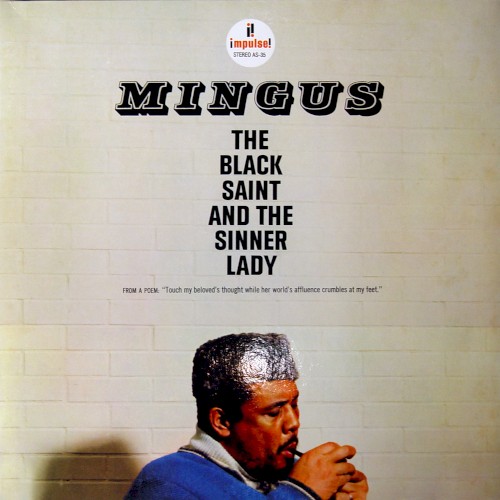

The Black Saint and the Sinner Lady is jazz at its most literary, its most orchestral, and its most unhinged. Charles Mingus conceived the album as a ballet - a six-movement suite depicting a struggle between good and evil, between the sacred and the profane, between the impulse to create and the impulse to destroy. The result is one of the most ambitious and fully realised recordings in the history of the genre, an album so densely composed and so ferociously performed that it leaves you physically exhausted.
The ensemble writing is staggering. Mingus uses an eleven-piece group with the textural sophistication of a full orchestra, layering saxophones, trumpets, trombones, guitar, and piano in combinations that create a constantly shifting timbral landscape. The opening of "Track A - Solo Dancer" builds from a single bass note into a churning, polyphonic mass of sound that recalls Duke Ellington's most adventurous work while pushing far beyond Ellington's harmonic boundaries. The way individual voices emerge from and dissolve back into the ensemble creates a sense of musical drama that is genuinely theatrical.
Mingus's bass playing is, as always, extraordinary. He does not merely accompany - he leads, provokes, supports, and disrupts, his bass functioning as both rhythmic anchor and melodic protagonist. On "Track B - Duet Solo Dancers," his arco (bowed) playing produces a sound so rich and so human that it seems to be singing - a sustained, vocal quality that anchors the track's free-jazz explorations in something emotionally grounded.
The collective improvisation is controlled chaos of the highest order. Mingus was famous for his rehearsal methods - he would sing parts to musicians, teach them phrases by ear, and then encourage spontaneous variation within strict structural guidelines. The result is music that sounds both composed and improvised, each musician contributing individual expression while serving the larger architectural vision.
Charlie Mariano's alto saxophone solo on "Track C - Group Dancers" is one of the most intense performances in recorded jazz - a sustained cry that builds over several minutes into something approaching ecstasy. The way Mingus's arrangement supports and frames this solo, the ensemble swelling beneath Mariano's exclamations, creates a synergy between individual expression and collective purpose that captures the essence of what jazz can be.
This is not easy music. But it is necessary music - a reminder that art at its most powerful confronts us with the full complexity of human experience.