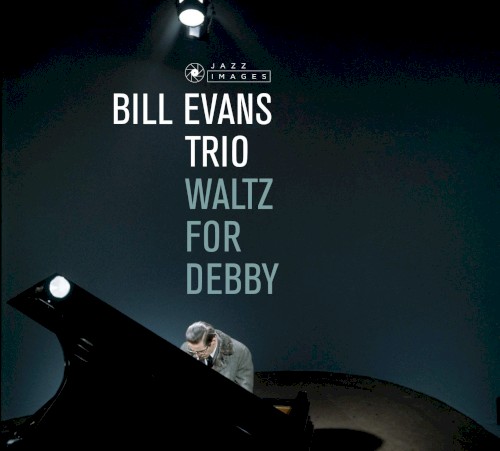
Waltz for Debby was recorded live at the Village Vanguard on June 25, 1961 - the same afternoon session that produced Sunday at the Village Vanguard. Eleven days later, bassist Scott LaFaro was killed in a car accident at the age of twenty-five. This knowledge haunts the recording with an unbearable poignancy, but even without that context, the music stands as one of the supreme achievements in jazz - an hour of playing so refined, so intimate, and so emotionally rich that it redefines what a piano trio can accomplish.
Evans's touch is the album's revelation. He plays with a dynamic range that makes most pianists sound like they are wearing boxing gloves - the quietest passages are barely audible, notes emerging from silence like bubbles rising through water, while the loudest moments never exceed a conversational volume. On the title track, his right hand picks out the melody with a delicacy that makes each note feel precious, while his left hand provides harmonic support through voicings of such sophistication that they suggest entire worlds of unexplored emotional territory.
LaFaro's bass playing is revolutionary. Freed from the traditional walking-bass role, he engages in a constant, elevated dialogue with Evans, his melodic lines weaving around and through the piano parts with a fluency and inventiveness that was years ahead of its time. On "My Foolish Heart," his bowed introduction creates a rich, cello-like tone that sets the emotional temperature for Evans's subsequent statement of the melody. His pizzicato work throughout the set is equally remarkable - each note placed with an unerring sense of time and harmonic awareness.
Paul Motian's drumming is a masterclass in subtlety. His brushwork provides a delicate rhythmic shimmer that supports without directing, responding to every nuance of Evans's and LaFaro's playing with an intuition that makes the trio sound like a single organism with three voices. The way he negotiates the tempo fluctuations on "Milestones" - following Evans's rubato phrasing while maintaining an underlying pulse - is the work of a supremely gifted musical mind.
The live recording captures the room - the clink of glasses, the murmur of conversation - and these ambient sounds, rather than detracting from the music, enhance it, placing you in the Village Vanguard on that June evening, bearing witness to an act of creation that will never happen again.