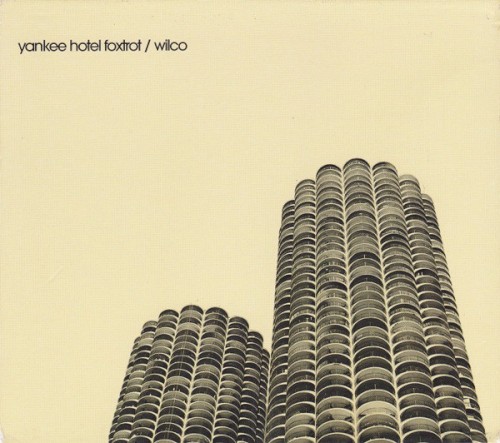

Yankee Hotel Foxtrot is the sound of a band tearing itself apart and discovering something extraordinary in the wreckage. The famously tortured recording process - which saw multi-instrumentalist Jay Bennett fired, the album rejected by Reprise Records, and the entire thing leaked online before eventually finding a home on Nonesuch - infuses every moment with a tension between beauty and dissonance, order and chaos, that is utterly compelling.
Jeff Tweedy's songwriting reaches its peak here. "Jesus, Etc." is a benediction disguised as a love song, its gentle acoustic guitar and pedal steel arrangement underpinned by string parts that shimmer with a fragile, almost crystalline beauty. "I Am Trying to Break Your Heart" opens the album with seven minutes of sonic collage - piano, programmed beats, backwards guitars, and Tweedy's stream-of-consciousness lyrics tumbling over each other in a controlled chaos that somehow resolves into one of the most beautiful choruses on the record.
The production by Jim O'Rourke is crucial to the album's identity. O'Rourke took Tweedy and Bennett's raw recordings and added layers of noise, static, and electronic interference that give the album its distinctive character - the sound of analogue warmth being disrupted by digital anxiety. The way "Poor Places" dissolves into a wash of shortwave radio static and found sound is genuinely disorienting, blurring the line between music and noise in a way that feels both intellectual and deeply emotional.
Glenn Kotche's drumming is a revelation. His patterns are inventive and unpredictable, often working against the grain of the songs in ways that create rhythmic tension without losing the groove. On "I'm the Man Who Loves You," his loose, swinging beat gives the song a warmth that counterbalances the angular guitar work. John Stirratt's bass playing is melodic and fluid, providing the harmonic glue that holds the more experimental moments together.
Yankee Hotel Foxtrot is an album about disconnection - from loved ones, from institutions, from the idea of America itself. That it communicates this theme so powerfully through music that is itself fractured and dislocated is its greatest achievement. This is the album where Wilco stopped being an alt-country band and became something much more important.