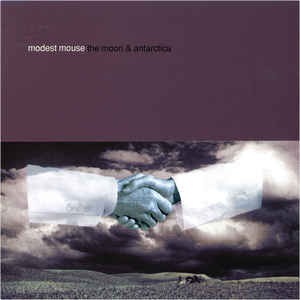

The Moon & Antarctica is Modest Mouse's most ambitious record, and like most ambitious records, it is brilliant and frustrating in roughly equal measure. Isaac Brock's band had always dealt in existential anxiety and geographical restlessness, but their major-label debut expands those themes to cosmic proportions. These songs are about the universe - its indifference, its scale, the terrifying insignificance of human existence within it - and the music matches that scope with arrangements that range from delicate acoustic picking to walls of processed noise.
The guitar work is endlessly inventive. Brock's playing style - angular, percussive, built on unusual chord voicings and unexpected rhythmic accents - gives the songs a nervous energy that perfectly mirrors the lyrical content. On "3rd Planet," his acoustic guitar creates a gentle, almost hymn-like foundation that makes the song's existential musings feel grounded and personal rather than abstract. "Gravity Rides Everything" features one of his most memorable riffs - a simple, descending figure played on clean electric guitar that seems to capture the sensation of weightlessness described in the title.
Dann Gallucci's contributions add textural depth throughout. His effects-laden guitar parts on "Dark Center of the Universe" create a swirling, psychedelic backdrop that supports Brock's more angular playing. The interplay between the two guitars is one of the album's most consistent pleasures, each player occupying different sonic territory while remaining in constant conversation.
The production, by Brian Deck and the band, is more polished than their earlier work but retains the rawness that gives Modest Mouse their distinctive character. The drums have a natural, roomy sound that grounds the more experimental moments in physical reality, while the bass provides a warm, melodic foundation.
At fifteen tracks and nearly an hour, the album occasionally sprawls beyond its means. The ambient interludes and sound experiments that punctuate the tracklist are sometimes more interesting in concept than execution. But when the album locks into its best moments - the devastating "Lives," the propulsive "Paper Thin Walls," the apocalyptic closer "What People Are Made Of" - it justifies every minute of its runtime.