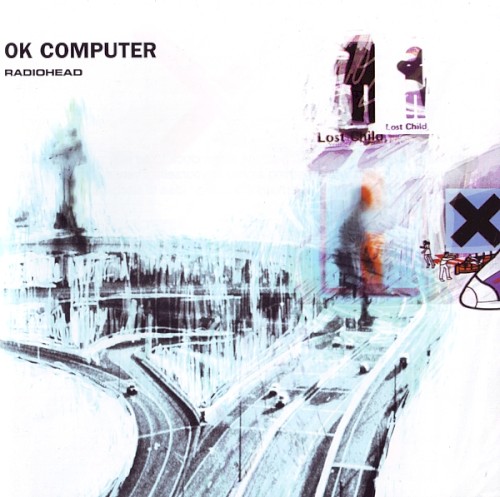

There is a moment roughly two minutes into "Airbag" where Jonny Greenwood's guitar splinters into a fractured, clattering rhythm that sounds like machinery coming apart at the seams. It is the first thing you hear on OK Computer, and it tells you everything about what is coming: an album that takes the vocabulary of rock music and bends it until the notes themselves seem to question their own existence.
OK Computer arrived in 1997 like a transmission from a parallel universe where Brit-pop never happened. While their contemporaries were busy writing lad anthems and looking backwards to the sixties, Radiohead planted a flag in the future and dared anyone to follow. The production, helmed by Nigel Godrich in his first full-album collaboration with the band, layers acoustic warmth beneath sheets of digital anxiety. Listen to the way "Paranoid Android" shifts through its movements - from the delicate arpeggiated verses to the savage, distorted midsection and back again - and you can hear a band that has completely transcended the limitations of the three-minute pop song.
Thom Yorke's vocals have never been more perfectly deployed. On "Let Down," his falsetto floats above cascading guitar arpeggios with the weightlessness of an astronaut untethered from a space station. On "Climbing Up the Walls," he sounds genuinely unhinged, his voice cracking under the pressure of the track's claustrophobic string arrangements. The lyrics read like dispatches from someone slowly losing their grip on a world that is accelerating beyond human comprehension - transport, motorways, handshakes, carbon monoxide - the mundane machinery of modern life rendered as existential horror.
The guitar interplay between Greenwood and Ed O'Brien deserves special attention. O'Brien's shimmer-laden delay textures create a sonic atmosphere that is at once vast and suffocating, while Greenwood's angular riffs cut through with surgical precision. "Lucky" contains one of the most emotionally devastating guitar solos in rock history - a slow, deliberate climb up the neck that feels like someone reaching for something just beyond their grasp.
What makes OK Computer endure is its refusal to offer comfort. This is not an album that tells you everything will be fine. It is an album that sits with you in the wreckage and says: yes, this is what it feels like. Twenty-nine years later, its vision of alienation in a hyper-connected world feels less like prophecy and more like journalism.