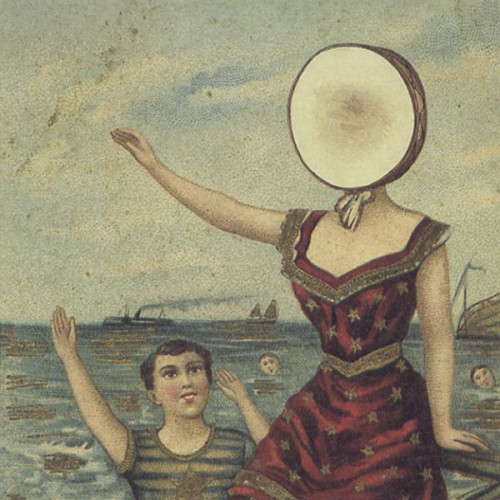

In the Aeroplane Over the Sea should not work. An album about Anne Frank, semen, two-headed boys, and the King of Carrot Flowers, recorded in a converted warehouse with a singing saw and a marching-band brass section, fronted by a man who screams his lyrics like a revival preacher having a nervous breakdown - on paper, this is the recipe for an unlistenable disaster. Instead, it is one of the most emotionally overwhelming records ever made.
Jeff Mangum's voice is the album's most polarising element, and also its greatest strength. He sings with the kind of raw, unfiltered intensity that makes technical polish irrelevant. When he howls "I love you Jesus Christ" at the top of his register on "The King of Carrot Flowers Pts. Two & Three," it does not matter whether you share his sentiment or even understand it. The conviction is so total, so absolute, that it transcends its own content and becomes something purely musical.
The arrangements are deceptively sophisticated. Robert Schneider's production buries layers of texture beneath the apparent lo-fi simplicity - listen to the way the brass on the title track swells from a distant murmur to a full orchestral blast, or the way Julian Koster's singing saw on "In the Aeroplane Over the Sea" creates a ghostly countermelody that hovers above the acoustic guitars like smoke. The fuzz bass on "Holland, 1945" hits with a physical force that belies the song's intimate subject matter.
Mangum's acoustic guitar playing is often overlooked. His strumming is aggressive and rhythmically complex, with a percussive attack that drives songs forward with an almost punk energy. The chord voicings on "Oh Comely" - an eight-minute acoustic epic that builds to one of the most cathartic climaxes in indie rock - are rich and unusual, creating harmonic tensions that mirror the emotional turbulence of the lyrics.
The album's legacy is inseparable from its mystery. Mangum essentially disappeared after its release, adding a layer of mythology that has only deepened its cult status. But strip away the legend, and what remains is a record of staggering emotional honesty - ugly, beautiful, confusing, and absolutely essential.