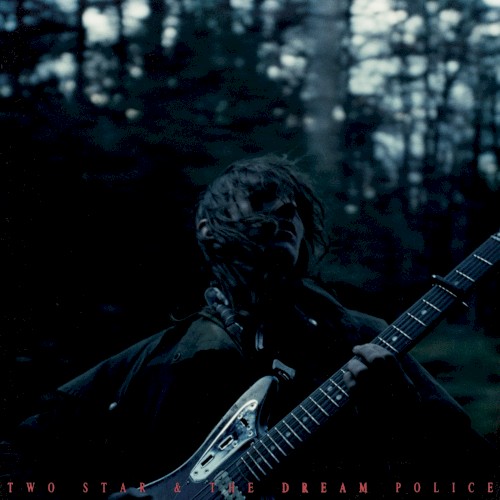

Two Star & the Dream Police begins with a sound that is hard to place and impossible to forget - a guitar tone so warped and saturated that it occupies a space somewhere between instrument and atmosphere, between playing and dissolving. Michael Gordon - Mk.gee to the world that named this album number one on lists from Clash to Dazed to the New York Times - has built an entire aesthetic on this ambiguity. Is it a guitar record? A pop record? An R&B record? The answer is yes, to all of these, and also to none of them. It is something else entirely.
The production approach is texture-first in a way that rewrites the rules of what a guitar album can be in 2024. Traditional guitar heroes worship tone - that perfect clean Fender shimmer, that Marshall crunch, that liquid Santana sustain. Mk.gee worships damage. His guitar sounds are run through so many layers of processing that they emerge as something closer to synthesisers - smeared, glitchy, beautiful in their imperfection. On "How Many Miles," the guitar tone flutters and warps like a signal received from a distant satellite, each note arriving slightly corrupted and all the more affecting for it.
The Prince comparisons are warranted but incomplete. Yes, there is a falsetto here that channels the Minneapolis genius at his most ethereal, and yes, the blending of funk, pop, and something weirder recalls Sign o' the Times-era experimentation. But where Prince was precise and controlled, Mk.gee is deliberately loose, allowing his songs to drift and smear at the edges. The beats feel handmade - slightly off-grid, breathing with a human irregularity that no quantise function could replicate. This is lo-fi not as limitation but as philosophy.
The dreamlike quality that runs through every track is not accidental. Gordon has spoken about the influence of sleep and unconscious states on his writing process, and you can hear it in the way songs dissolve into each other, the way melodies surface and submerge like thoughts on the edge of consciousness. Verses do not always resolve into choruses. Hooks appear and then evaporate before they can be fully grasped. It is an album that resists memorisation and demands immersion - you do not hum these songs so much as inhabit them.
What makes Two Star & the Dream Police a genuine debut landmark is its refusal to announce itself as one. There are no grand gestures here, no showpiece vocals designed to demonstrate range, no guitar solos that exist purely to impress. Instead, there is a sustained mood - warm, hazy, melancholic, alive - that carries you through twelve tracks without ever breaking character. It is an album that trusts its own atmosphere completely, and that trust is rewarded with an experience that lingers long after the final, fading note.