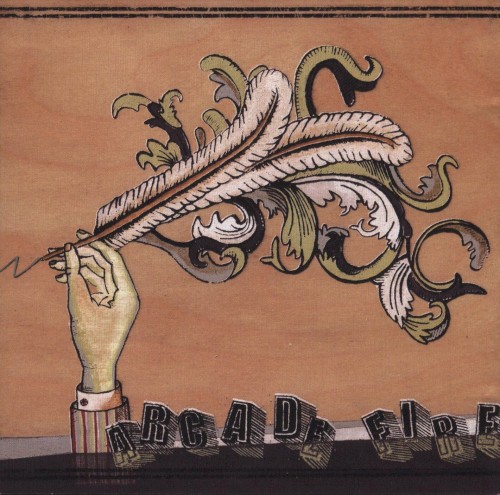
Funeral announced itself with the sound of a band playing as though their lives depended on it. The opening track, "Neighborhood #1 (Tunnels)," begins with a simple piano figure before the entire ensemble crashes in - strings, guitars, drums, voices stacked upon voices - and suddenly you are in the presence of something genuinely monumental. Win Butler and Régine Chassagne sing to each other across the mix like two survivors shouting across a flooded landscape, and the emotion is so raw, so urgent, that it feels almost intrusive to listen.
The album was written in the shadow of multiple deaths in the band members' families, and that grief saturates every note. But Funeral is not a maudlin record. It processes loss through action - through the sheer physical exertion of making music with every instrument available. The arrangements are maximalist in the truest sense: accordion, hurdy-gurdy, French horn, violin, xylophone - all deployed not for ornamentation but because the emotions being expressed demand that kind of sonic scale.
Butler's guitar work is underrated. On "Neighborhood #3 (Power Out)," his choppy, distorted rhythm playing drives the song forward with a punk urgency that the strings and keyboards expand into something epic. The interplay between the guitars and Richard Reed Parry's various string and keyboard contributions creates a sonic depth that rewards repeated listening - there is always another layer to discover, another countermelody hiding beneath the surface.
The "Neighborhood" suite that forms the album's first half is conceptually ambitious without being pretentious. Each song explores a different aspect of suburban alienation - the desire to escape, the fear of isolation, the slow death of imagination - but the specificity of Butler's lyrics grounds the grand themes in recognizable human experience. "Crown of Love" shifts the focus inward, its waltz-time arrangement and Butler's cracking voice conveying romantic desperation with an intensity that borders on the operatic.
"Rebellion (Lies)" closes the album with what amounts to a call to arms - a surging, anthemic refusal to accept the world as it is. It is the sound of a generation of indie kids discovering that their music could fill arenas without sacrificing an ounce of sincerity.